

Some places never leave you. For Warren and Jennie Lloyd, Japan is one of them. “There’s a clarity to Japanese design that stays with you. It’s subtle, but it changes the way you see everything,” Warren said, looking back on a journey that began decades ago.
Warren’s early experiences in Japan helped shape his understanding of what architecture could be: quiet yet intentional, rooted in nature and deeply attuned to daily life. For Jennie, Japan is woven into the beginnings of their shared story—a place where they first built a simple life together while navigating a new culture and new responsibilities as a young couple.
This past October, they returned for the first time in many years. They expected nostalgia. They came away with a sharper awareness of how their early experiences continue to inform both their lives and the work of Lloyd Architects.
Many Journeys, One Foundation
Warren’s connection to Japan has unfolded across several defining chapters, each one shaping the next. As a teenage missionary for The Church of Jesus Christ of Latter-day Saints in Tokyo, he gained spiritual grounding and a deeper respect for nature.
As a Monbusho Research Scholar at Kobe University in his twenties, he studied spatial patterns in traditional Japanese architecture, traveling to temples and shrines across Kansai and beyond—from Kyoto and Nara to Okayama and Shimane.
In his thirties, living in Yamagata with Jennie and their young son, Warren worked as an architect for the Japanese Shelter Company. There, he learned about engineered wood structures and seismic-resistant design, while imagining how those systems might translate in the American West.
“Those years weren’t just educational—they were formative,” Warren said. “They taught me about scale, intention and the relationship between buildings and people. Even the smallest details—wood joints, angles of light, the spacing between elements—affect everything else.”
Hiking the Historic Nakasendo Trail
Warren and Jennie’s recent trip took them across the Central Alps of Japan along sections of the historic Nakasendo Trail. This East-West route wound through cedar forests and timeworn postal towns marked by weathered gateway arches.
Walking among villages where timber has endured hundreds of winters was like stepping into a living archive: shoji screens maintained with precision, beams burnished by generations of hands, stones carefully placed to anchor rooftops against the elements.

Traveling the Kiso Valley's deep forests on foot—from Ena to Narai and from Magome Pass to Tsumago—felt like stepping into a centuries-old woodblock print.
Craft, Flexibility and Time
Wood remained a common element throughout Warren and Jennie’s journey, from the canopies of the forest to the finely joined timber frames of the machi-ya houses. Through mountain passes and historic towns, the Lloyds traced generations of craft.
Time spent with temple carpenters in Niigata Prefecture offered renewed insight into seismic strategies grounded in flexibility—principles Warren first encountered in Japan decades ago, which still influence Lloyd Architects’ work today.
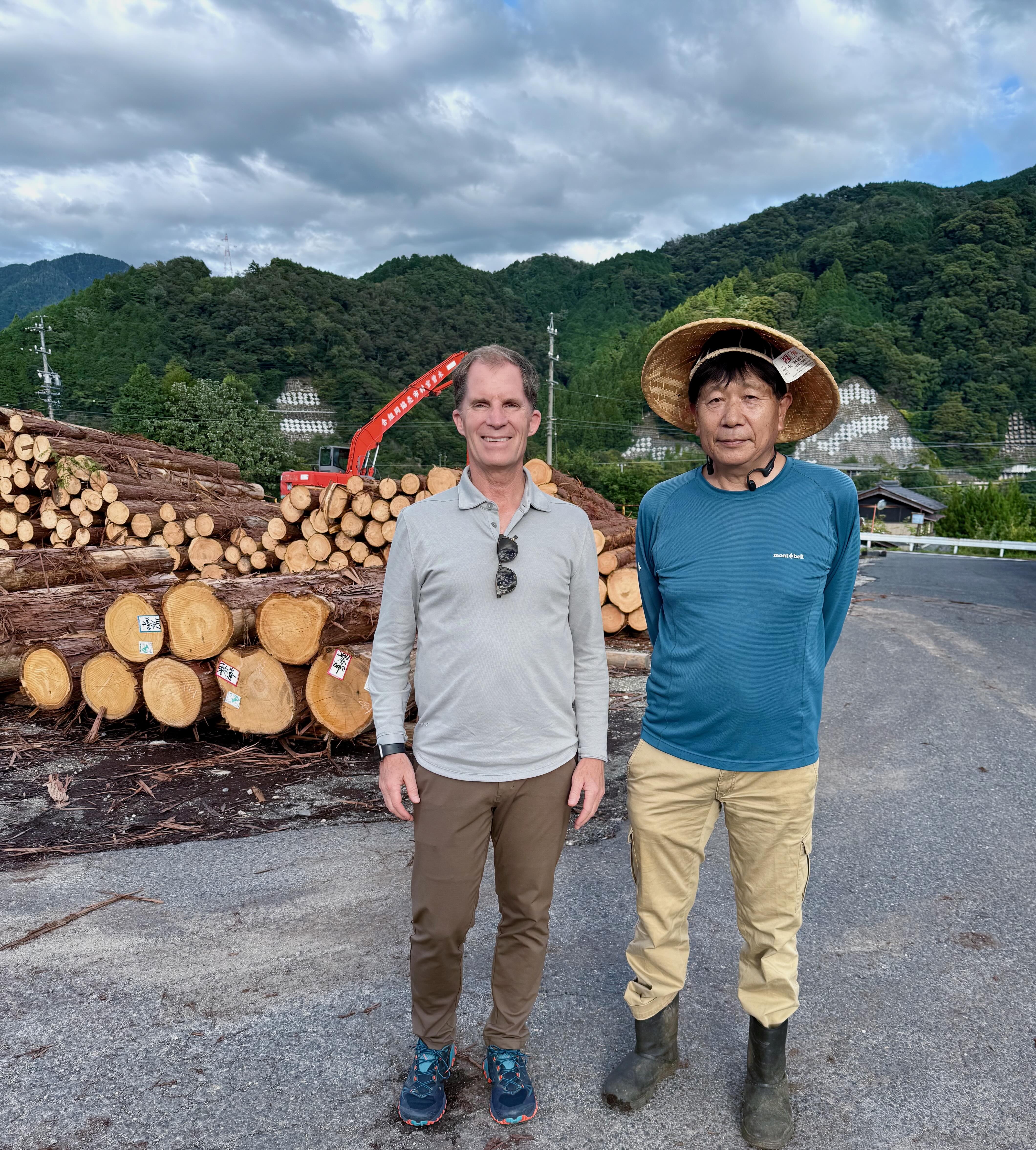
Repurposed wood frames—informed by the traditional zaidai-kohou building practice—are designed to give rather than resist earthquake waves. In the mountainous Gifu Prefecture with Kimura-san of Yakisugi, the Lloyds watched cedar and cypress harvested, peeled, cut and milled with precision, transforming timber into premium building components for this practice.
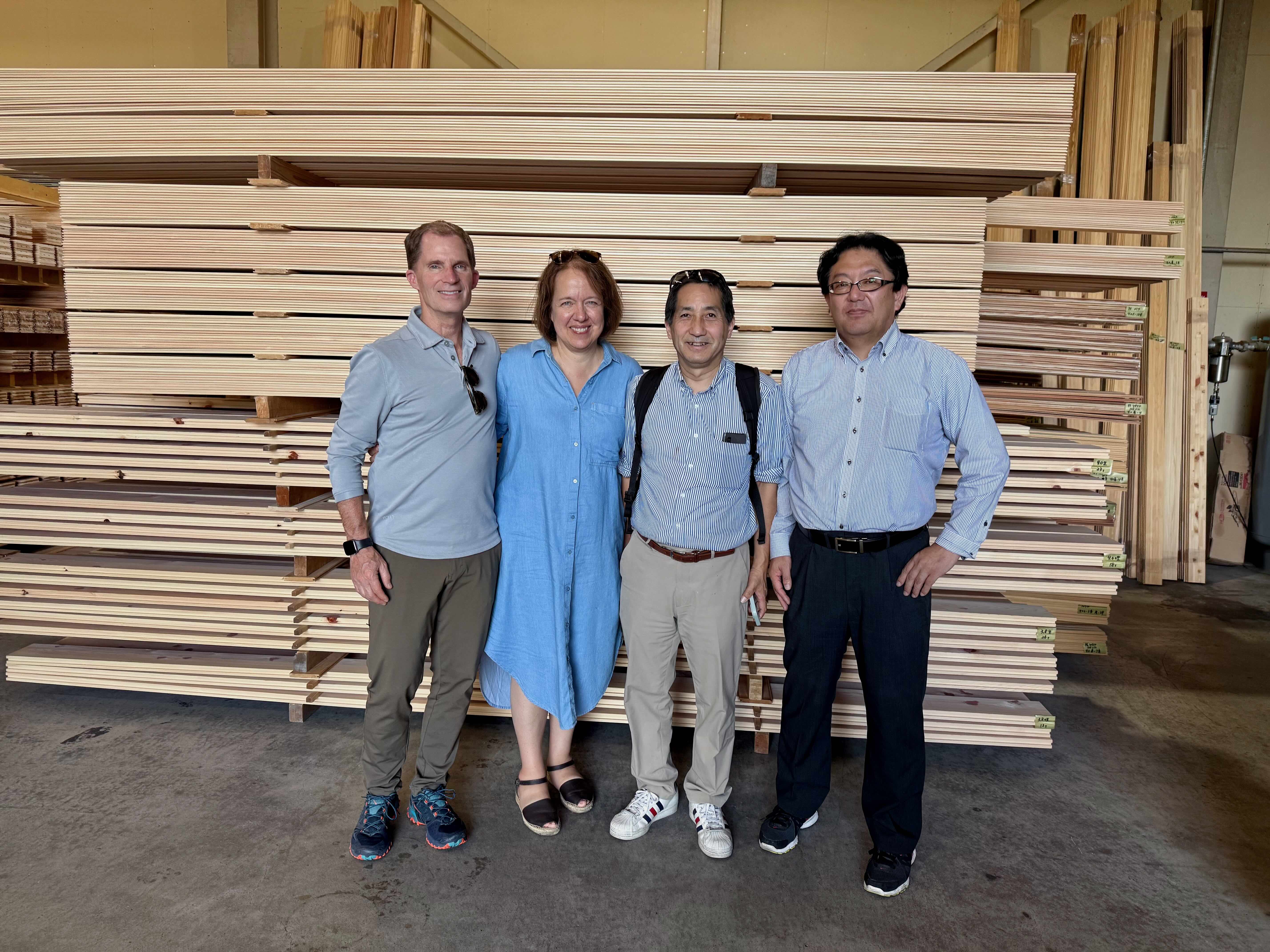
As global construction technologies continue to evolve, Warren is exploring how these materials and methods could benefit future residential projects in Utah’s mountains.
.jpeg)
In Takayama, Warren and longtime friend and Kobe University classmate Masahiro Mishima reminisced about their early years and visited the Yoshijima House, a machi-ya whose careful proportions, light and structure reflect the refined aesthetic of the 19th-century Japanese merchant class. Mishima-san and his wife, Kimi, also generously welcomed Warren and Jennie into their home in Toyota City.
In the deep-snow country of Gifu Prefecture, the Lloyds and Mishimas toured the Toyama House, built in the 1800s, with its steep thatched roofs and multi-story attics. It offered insight into how families once lived, worked and shared space in this remote region. The Toyama House’s clarity, efficiency and harmony with the mountains echo aspects of some of the barns and farm structures Lloyd Architects has created in the American West.
.jpeg)
The Logic of Human Scale
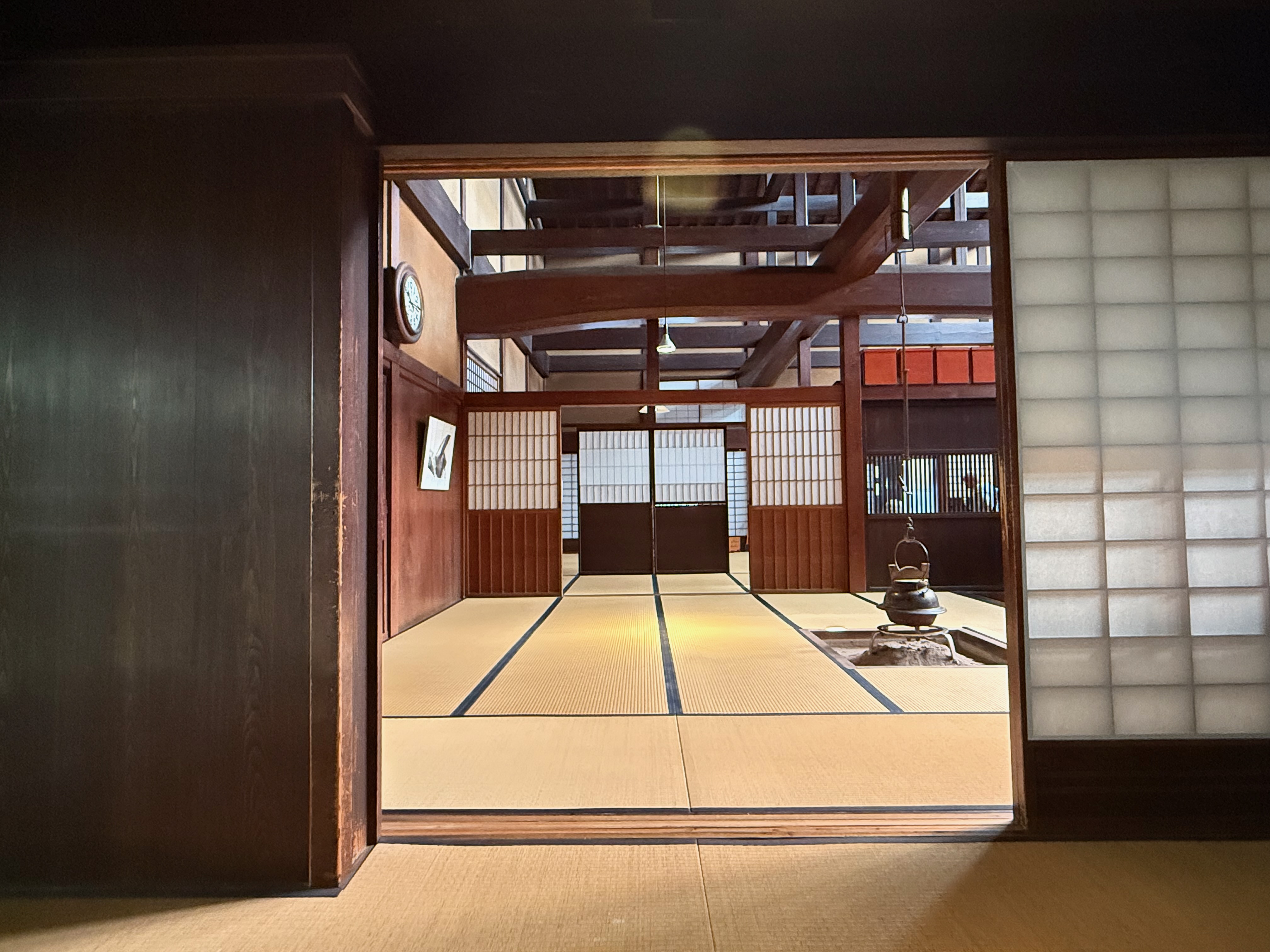
Among Warren’s many lessons from Japan is the intelligence of its traditional dimensional systems: the 3' x 6' tatami mat and the 6' x 6' shaku grid. Far from arbitrary, these measurements reflect the body’s scale, reach and daily activities. The proportions of a “washitsu” tatami room have long influenced Lloyd Architects’ residential work, regardless of style. Modern Western architecture too draws on the same sense of modularity, openness and connection to nature.
2.jpg)
The Wisdom of Quiet Design
Japan also brought to the surface a quality Warren and Jennie have long appreciated: quiet design. Not quiet in absence, but in mindful attention. It’s found in a tea house at dawn, a lantern moving between buildings at night, a timber frame awaiting a second life—and the mastery of carpenters whose buildings last for centuries because they yield rather than resist.
“Quiet means reflective to me,” Warren said. “The quality of the space and the materials provide a feeling of calm, inviting reflection rather than urgency.” This sensibility remains evident in the work of Lloyd Architects—in spaces that gather, shelter and support the flow of daily life.
Lessons Carried Home
The ideas Warren and Jennie have absorbed in Japan—across seasons, cities and stages of life—are threads woven into the very DNA of Lloyd Architects’ work.
They’re in the wood-framed spatial logic of the Logan Canyon House. The careful restraint of the Sundance Cabin. The post-and-beam timber frame of the Smithfield Canyon House. The agricultural simplicity of the Snuck Farm Barn. The measured order of the APA Idea House and San Juan Island Tower. Across projects and settings, the throughline remains the same: architecture that thoughtfully anticipates and enhances how people live, move and connect.
For the Lloyds, Japan has proven far more than a destination. It’s been a lens that has clarified the potential of space, the poetry of proportion and the many ways people inhabit the world.
“This trip had a sense of coming full circle,” Warren said. “We reinforced cherished friendships and forged new ones while reflecting on enduring principles of design—seen with fresh eyes. It also sparked new ideas for the future.”
Wherever the team may be, Lloyd Architects is always Building from Here.
